 |
 |
|
|
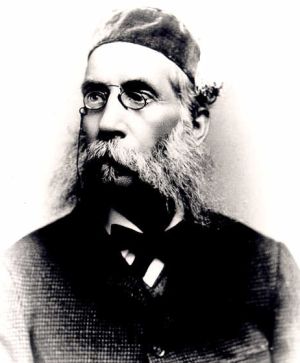
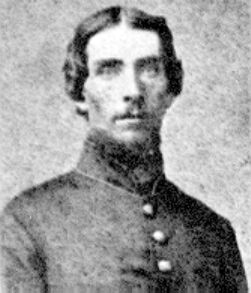
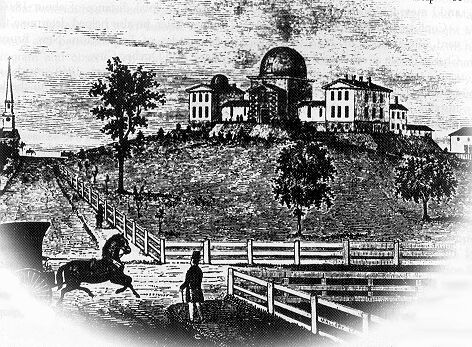
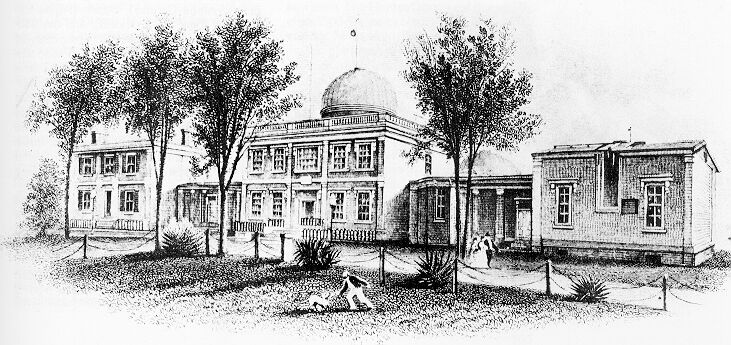
Tuttle was born in 1837. He entered the Harvard College Observatory as an assistant astronomer in 1857 under the directorship of William Cranch Bond. His older brother Charles Wesley Tuttle (1829-1881) was there until 1854. Horace Tuttle used the 4" f /8 Merz comet seeker to sweep the skies for comets and was very successful. He was supported by Asaph Hall who calculated the orbits. He left his position at Harvard in 1862 to join the Civial War for only 9 month. After working for the Navy and joining geographical missions he started observing programs at the U.S. Naval Observatory, Washington in 1884 (where he met Hall again). He died on 18 August 1923 in Falls Church, VA.
Tuttle found 5 NGC-objects; only 1 was new. The 4 known ones were seen with a 4" comet seeker at Harvard College Observatory (they were discovered by W. Herschel, Schönfeld and Winnecke). The galaxy NGC 7541 in Pisces was seen with the 26" refractor at U.S.Naval Observatory, Washington D.C. However, it is identical with Herschel's NGC 7541. NGC 1333, NGC 6643 and NGC 6791 are included as #17, #40 and #45, rescpectively, in Auwers' list of new nebulae in William Herschel's Verzeichnisse von Nebelflecken und Sternhaufen, Königsberg 1862.
| D | N | NI | Y | M | D | Ap | I | T | Discoverer | Con | Type | S | ID | Author | Title | Source |
| N | 1333 | 1859 | 2 | 5 | 4,0 | Rr | v | Schönfeld 31.12.1855 | PER | RN | 2 | Bond, G. P. | Letter from Mr. Bond to Mr. Carrington | MNRAS 19, 224 (1859) | ||
| N | 2655 | 1859 | 4 | 8 | 4,0 | Rr | v | Herschel W. 26.9.1802 | CAM | SB0-a | 1 | Bond, G. P. | A list of new nebulae seen at the observatory of harvard College, 1847-1863 | Proc. Am. Acad. Arts & Sci. 6, 177-182 (1866) | ||
| N | 6643 | 1859 | 9 | 1 | 4,0 | Rr | v | Schönfeld 1858 | DRA | Sc | 1 | Bond, G. P. | Schreiben des Herrn Prof. Bond, Directors der Sternwarte in Cambridge, an den Herausgeber | AN [1337] 56, 269-272 (1861) | ||
| N | 6791 | 1859 | 7 | 17 | 4,0 | Rr | v | Winnecke Dec. 1853 | LYR | II3r | 4 | Auwers, A. | William Herschel's Verzeichnisse von Nebelflecken und Sternhaufen | Königsberg 1862 | ||
| 1 | N | 7581 | 1875 | 1 | 11 | 26,0 | Rr | v | PSC | SBc | 7 | NGC 7541 (Herschel W. 30.8.1785) | Newcomb S. | Observations made with the XXVI-inch Equatorial, 1875 | Astronomical and meteorological observations made during the year 1875 at the U.S. Naval Observatory, Vol. 15, p. 285 (1878) |
 |
 |