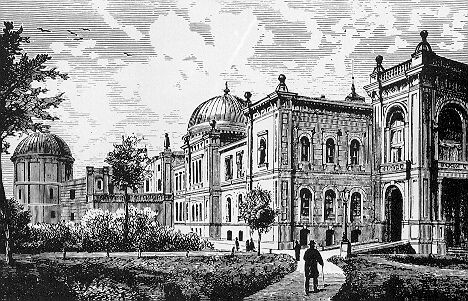
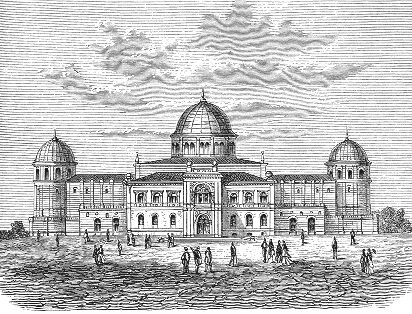
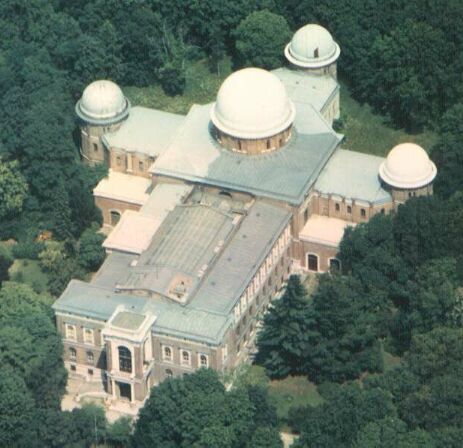
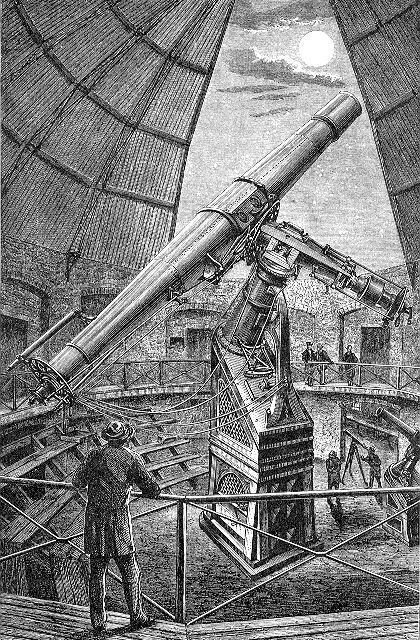
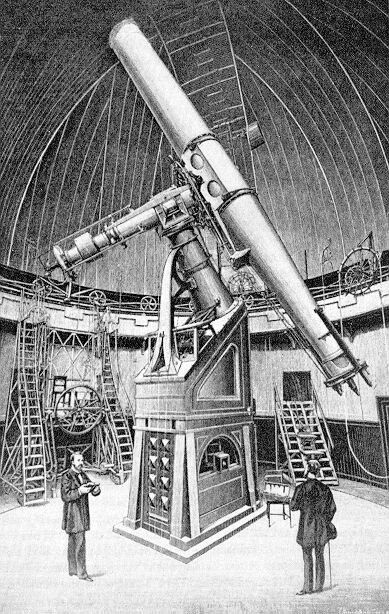
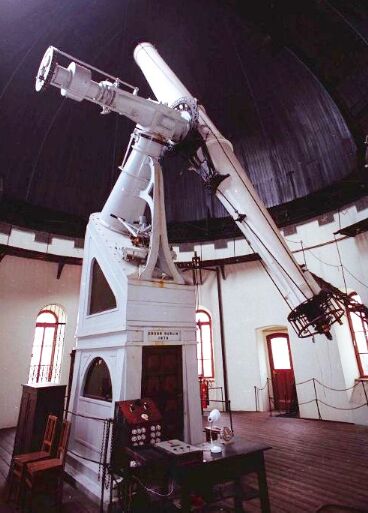
Palisa found 10 NGC- and 5 IC-objects at Vienna Observatory using the
12" Clark and 27" Grubb refractors; 7 NGC- and 4 IC-objects were
new. All objects are galaxies. NGC 927 was also found by Swift on Dec. 2, 1885.
The galaxy NGC 2981 in Leo is credited to Palisa by Dreyer,
but actually Oppenheim (assistant in Vienna) has found the object with
the 27" on March 10, 1886. NGC 2819, a galaxy in Cancer,
was seen by Palisa, but discovered 22 years
earlier by Marth. NGC 6654, a galaxy in Draco, was
found by Palisa with the 12", but Swift
was 9 days earlier; Lamp at Kiel was beaten by 3
days. IC 1514, a galaxy in Aquarius, was found by Palisa on
Sep. 19, 1893 with the 27", but this object is identical
to NGC 7776, discovered by Stone before in 1885. IC 4643, a galaxy in Hercules is identical
to Herschel's NGC 6301 (IV 57). IC 5290 is
the same as Tempel's NGC 7520.
|
D |
N |
NI |
Y |
M |
D |
Ap |
I |
T |
Discoverer |
Observer |
Con |
Type |
S |
ID |
Author |
Title |
Source |
List |
| 1 |
N |
927 |
1885 |
1 |
18 |
27,0 |
Rr |
v |
|
Swift L. 2.12.1885 |
ARI |
SBc |
1 |
|
Weiss, E. |
Beobachtungen von Planeten und Cometen
angestellt auf der Wiener Sternwarte während des Jahres 1885 |
AN [2732-33] 114, 337-354 (1885) |
1 |
| |
N |
2819 |
1886 |
4 |
2 |
12,0 |
Rr |
v |
Marth 21.12.1863 |
|
CNC |
E1 |
1 |
|
Weiss, E. |
Beobachtungen von Planeten und Cometen
angestellt auf der Wiener Sternwarte während des Jahres 1886 |
AN [2782-83] 116, 337-354 (1887) |
1 |
| 1 |
N |
2926 |
1886 |
3 |
27 |
12,0 |
Rr |
v |
|
|
LEO |
SBb |
1 |
|
Weiss, E. |
Beobachtungen von Planeten und Cometen
angestellt auf der Wiener Sternwarte während des Jahres 1886 |
AN [2782-83] 116, 337-354 (1887) |
2 |
| 1 |
N |
2944 |
1886 |
3 |
27 |
12,0 |
Rr |
v |
|
|
LEO |
Sc |
1 |
|
Weiss, E. |
Beobachtungen von Planeten und Cometen
angestellt auf der Wiener Sternwarte während des Jahres 1886 |
AN [2782-83] 116, 337-354 (1887) |
3 |
| 1 |
N |
3071 |
1886 |
3 |
10 |
12,0 |
Rr |
v |
|
|
LEO |
S0 |
1 |
|
Weiss, E. |
Beobachtungen von Planeten und Cometen
angestellt auf der Wiener Sternwarte während des Jahres 1886 |
AN [2782-83] 116, 337-354 (1887) |
5 |
| 1 |
N |
3094 |
1885 |
12 |
31 |
12,0 |
Rr |
v |
|
|
LEO |
SBa |
1 |
|
Weiss, E. |
Beobachtungen von Planeten und Cometen
angestellt auf der Wiener Sternwarte während des Jahres 1885 |
AN [2732-33] 114, 337-354 (1885) |
2 |
| 1 |
N |
3116 |
1886 |
3 |
10 |
12,0 |
Rr |
v |
|
|
LMI |
E0 |
1 |
|
Weiss, E. |
Beobachtungen von Planeten und Cometen
angestellt auf der Wiener Sternwarte während des Jahres 1886 |
AN [2782-83] 116, 337-354 (1887) |
6 |
| |
N |
3976 |
1886 |
3 |
26 |
12,0 |
Rr |
v |
Herschel W. 13.4.1784 |
|
VIR |
SBb |
1 |
|
Weiss, E. |
Beobachtungen von Planeten und Cometen
angestellt auf der Wiener Sternwarte während des Jahres 1886 |
AN [2782-83] 116, 337-354 (1887) |
7 |
| 1 |
N |
4587 |
1882 |
4 |
17 |
12,0 |
Rr |
v |
|
|
VIR |
S0 |
1 |
|
Weiss, E. |
Planeten- und Cometenbeobachtungen auf der
neuen Wiener Sternwarte |
AN [2520] 105, 369-386 (1883) |
|
| |
N |
6654 |
1883 |
9 |
20 |
12,0 |
Rr |
v |
Swift L. 11.9.1883 |
Lamp 23.9.1883 |
DRA |
SB0-a |
1 |
|
Palisa, J. |
Beobachtung von neuen Nebeln am 12zöll.
Refractor der Wiener Sternwarte |
AN [2544] 106, 381 (1883) |
|
| |
I |
591 |
1899 |
3 |
13 |
27,0 |
Rr |
v |
Todd 8.2.1878 |
Javelle 31.3.1892 |
LEO |
S? |
1 |
|
Palisa, J. |
Beobachtungen von Planeten, Cometen und
Nebelflecken |
AN [3634] 152, 145-154 (1900) |
22 |
| 1 |
I |
1514 |
1893 |
9 |
19 |
27,0 |
Rr |
v |
|
|
AQR |
Sa |
8 |
NGC 7776 (Stone 31.10.1885) |
Weiss, E. |
Beobachtungen auf der k. k. Sternwarte |
AN [3235] 135, 339-342 (1894) |
|
| 1 |
I |
1748 |
1899 |
11 |
2 |
27,0 |
Rr |
v |
|
|
ARI |
SBbc |
1 |
|
Palisa, J. |
Beobachtungen von Planeten, Cometen und
Nebelflecken |
AN [3634] 152, 145-154 (1900) |
1 |
| 1 |
I |
4643 |
1896 |
10 |
6 |
27,0 |
Rr |
v |
|
|
HER |
Sc |
8 |
NGC 6301 (Herschel W. 11.6.1787) |
Weiss, E. |
Beobachtungen auf der k.k. Sternwarte zu
Wien |
AN [3412] 143, 49-56 (1897) |
2 |
| 1 |
I |
5290 |
1896 |
10 |
4 |
27,0 |
Rr |
v |
|
|
AQR |
Sa |
8 |
NGC 7520 (Tempel 1876) |
Weiss, E. |
Beobachtungen auf der k.k. Sternwarte zu
Wien |
AN [3412] 143, 49-56 (1897) |
1 |